
LAB LEADERSHIP
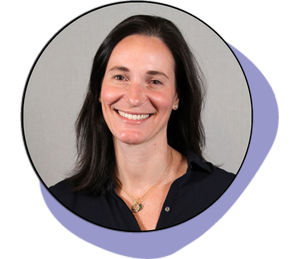
Leah G. Pope, PhD, is the Director of the Sozosei Lab. She is a Research Scientist at the New York State Psychiatric Institute and an Associate Professor of Clinical Behavioral Medicine in the Columbia University Department of Psychiatry (Division of Behavioral Health Services and Policy Research). Trained as an anthropologist, Dr. Pope has extensive experience conducting mixed methods research in the public mental health and criminal legal systems. She has worked in academic settings as well as within nonprofit research and policy organizations such as the Vera Institute of Justice, where she co-directed a national training and technical assistance initiative to improve police-based responses to individuals with mental illnesses and intellectual and developmental disabilities. Dr. Pope’s research has been supported by the National Institute of Mental Health, the National Science Foundation, The Pew Charitable Trusts, and private foundations including the Sozosei Foundation, Robert Wood Johnson Foundation, van Ameringen Foundation, and the Wenner Gren Foundation. Her current work focuses primarily on crisis response for people with serious mental illnesses. She is the Principal Investigator on a national survey of mobile crisis programs, and a Co-Investigator on a randomized controlled trial of Crisis Intervention Team training for police officers and a project to develop the crisis response workforce. In 2025, she was lead editor for the American Psychiatric Association’s book, Entangled: How People with Serious Mental Illness Get Caught in Misdemeanor Systems. Dr. Pope has an AB from Harvard University and a PhD from Columbia University Teachers College.
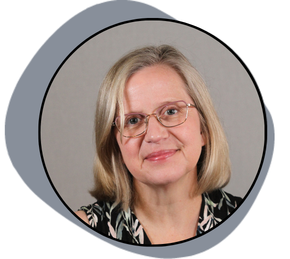
Amy C. Watson, PhD, is a Co-Director of the Sozosei Lab and She is a professor in the School of Social at Wayne State University. Trained as a mental health services researcher, she has focused on people with serious mental illnesses that come in contact with the criminal legal system and interventions to prevent and reduce criminal legal involvement. She has conducted extensive research on police encounters with persons with mental illnesses and the Crisis Intervention Team (CIT) model. Her current work is looking at models to reduce or eliminate the role of law enforcement in mental health crisis response and the development of the non-law enforcement crisis response workforce. Earlier in her research career, she was the project director of a NIMH funded center focused on mental illness stigma, and stigma reduction remains an important theme in her work. Other professional activities include serving on the CIT International Board of Directors from 2016-2021, (as President of the Board 2020-2021) and on the compliance team for the Department of Justice Settlement Agreement with the City of Portland, Oregon. Her direct practice experience includes working as a probation officer on a team serving clients with serious mental illnesses and as a Forensic Social Worker/Mitigation Specialist working on death penalty cases. She has a BA in Criminal Justice from Aurora University and an AM and PhD from the University of Chicago School of Social Service Administration.
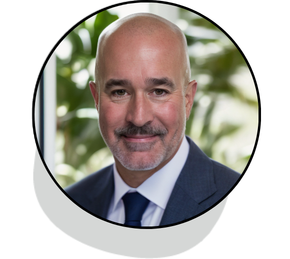
Michael T. Compton, MD, MPH, is a Co-Director of the Sozosei Lab. He is a Research Psychiatrist at the New York State Psychiatric Institute and a Professor of Psychiatry at Columbia University. Dr. Compton’s prior faculty appointments were at Emory University, The George Washington University, and Hofstra Northwell School of Medicine. He previously served as Chairman of Psychiatry at Lenox Hill Hospital (2013–2016) and Medical Director for Adult Services at the New York State Office of Mental Health (2016–2019). He has maintained continuous National Institute of Mental Health research funding for 20 years, studying first-episode psychosis, the Crisis Intervention Team policing model, and community-based mental health services. His research has led to more than 275 publications. His primary area of research relates to criminal justice over-involvement among individuals with serious mental illnesses, usually for minor misdemeanor charges. Dr. Compton’s research has been supported by the National Institute of Mental Health, the National Science Foundation, The Pew Charitable Trusts, and several private foundations including the Sozosei Foundation. His books include a manual for police officers responding to persons with mental illnesses, a guide for patients with first-episode psychosis and their family members, a textbook on the complex connection between marijuana and schizophrenia, and seven American Psychiatric Association books. Dr. Compton has a BS from Mary Washington College, an MD from the University of Virginia, and an MPH from Emory University. In addition to psychiatry, he is board-certified in preventive medicine and lifestyle medicine.
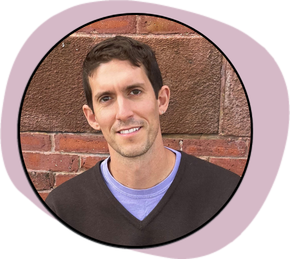
Kellan McNally, MSW, MA, is the Project Manager for the Sozosei Lab and a doctoral candidate in Social Work and Anthropology at Wayne State University. He works with Lab leadership to support its research and fellows program and to help carry out the Lab’s core initiatives. He contributes to projects related to crisis response workforce development and the federal and state funding mechanisms that shape the structure and delivery of crisis services. His research examines the history of psychiatric treatment systems, the ways problems are defined within them, and the place of paid work in the lives of people with complex service histories. He is a practicing clinical social worker with leadership experience in crisis intervention, including directing a 24/7 emergency service program and developing community-based services designed to reduce hospital and emergency department utilization. He holds a BA in Cultural Anthropology from Boston University, an MSW from Simmons College, and an MA in Medical Anthropology from the Boston University School of Medicine.